Dream Note
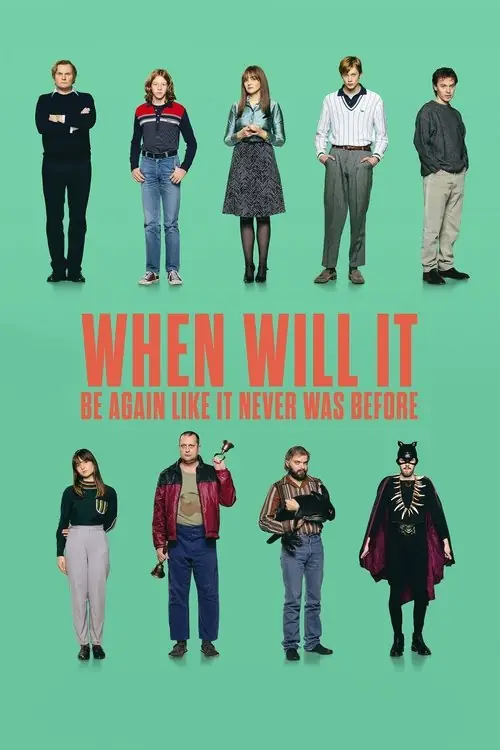
Imagine being a kid and your playground is a psychiatric hospital. Not the kind of setup you'd typically find in a parenting manual, is it? But that's precisely the reality for young Joachim, whose dad happens to run one of Germany's most sprawling mental health facilities. And here's the twist — the kid doesn't find it creepy or isolating. He finds it… homey. The residents aren't scary strangers; they're extended family, which either speaks to an incredibly warm institutional culture or to the fact that Joachim's bar for normalcy has been set in an unusually interesting place. Meanwhile, his mother is somewhere else entirely — painting watercolors and dreaming of Mediterranean evenings while the relentless German drizzle drums against the windows. She's essentially living inside a vacation brochure that she can never actually visit, and that quiet ache permeates everything she touches on canvas. Then there's the father, who's ostensibly steering this massive institution but is also navigating his own private detours that nobody in the family seems to discuss. It's one of those households where everyone is physically present but spiritually scattered across different zip codes. What makes this coming-of-age tale so gently devastating is the way it captures that universal moment when the world you took for granted as a child starts shifting beneath your feet. Joachim doesn't experience some dramatic, explosive rupture — instead, it's a slow, tidal realignment, like watching a sandcastle dissolve not under a crashing wave but under the patient, unstoppable creep of the tide. It's German cinema doing what German cinema does best: making you feel profoundly melancholic about growing up while simultaneously making you want to hug your own weird family and never let go. It's a quietly extraordinary film that understands sometimes the most profound transformations happen in the spaces between words, in the gaps between what people say and what they actually need.
Imagine being a kid and your playground is a psychiatric hospital. Not the kind of setup you'd typically find in a parenting manual, is it? But that's precisely the reality for young Joachim, whose dad happens to run one of Germany's most sprawling mental health facilities. And here's the twist — the kid doesn't find it creepy or isolating. He finds it… homey. The residents aren't scary strangers; they're extended family, which either speaks to an incredibly warm institutional culture or to the fact that Joachim's bar for normalcy has been set in an unusually interesting place. Meanwhile, his mother is somewhere else entirely — painting watercolors and dreaming of Mediterranean evenings while the relentless German drizzle drums against the windows. She's essentially living inside a vacation brochure that she can never actually visit, and that quiet ache permeates everything she touches on canvas. Then there's the father, who's ostensibly steering this massive institution but is also navigating his own private detours that nobody in the family seems to discuss. It's one of those households where everyone is physically present but spiritually scattered across different zip codes. What makes this coming-of-age tale so gently devastating is the way it captures that universal moment when the world you took for granted as a child starts shifting beneath your feet. Joachim doesn't experience some dramatic, explosive rupture — instead, it's a slow, tidal realignment, like watching a sandcastle dissolve not under a crashing wave but under the patient, unstoppable creep of the tide. It's German cinema doing what German cinema does best: making you feel profoundly melancholic about growing up while simultaneously making you want to hug your own weird family and never let go. It's a quietly extraordinary film that understands sometimes the most profound transformations happen in the spaces between words, in the gaps between what people say and what they actually need.
— Dreamer's log, recorded 2022 in the cloudsAdjacent Dreams in the Cloud
 Absolute Vow
Welcome to 1000 BC, where the entertainment options were limited to 'contemplate mortality' and 'walk…
Absolute Vow
Welcome to 1000 BC, where the entertainment options were limited to 'contemplate mortality' and 'walk…
 Around the World in Eighty Ways
Mavis Davis has reached her breaking point, and frankly, it's a miracle it took this long. Her younger son…
Around the World in Eighty Ways
Mavis Davis has reached her breaking point, and frankly, it's a miracle it took this long. Her younger son…
 Lady Dallas
Somewhere in the sun-drenched rural expanses of southwestern France, where the lavender smells like money and…
Lady Dallas
Somewhere in the sun-drenched rural expanses of southwestern France, where the lavender smells like money and…
 Mickey 17
So you think your job sucks? You think your boss is demanding? Try explaining to Mickey Barnes — a gentleman…
Mickey 17
So you think your job sucks? You think your boss is demanding? Try explaining to Mickey Barnes — a gentleman…