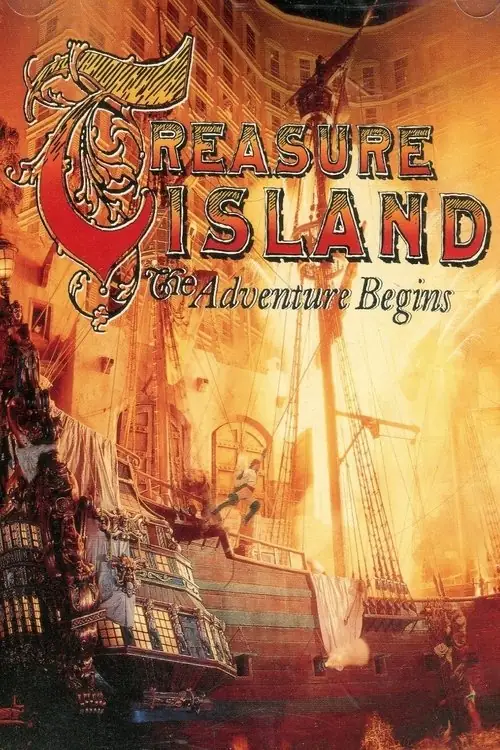
Dream Note
Picture this if you will: a young boy with an imagination so violently active it could power a small city is on vacation at a place called TREASURE ISLAND. In Las Vegas. Let me just let that sink in for a moment. His parents have taken him to a Las Vegas resort literally named after one of the most famous adventure novels in English literature, and they're somehow surprised when the kid starts hallucinating pirates. This is the cinematic equivalent of taking your child to a chocolate factory and then acting bewildered when they develop a sweet tooth. Our young protagonist, clearly the inheritor of an imagination that refuses to acknowledge the boundaries between reality and fiction, begins fantasizing that he encounters none other than Long John Silver himself – the legendary one-legged pirate, parrot enthusiast, and the original schemer whose moral compass was as unreliable as a cheap GPS. The sheer audacity of this child's daydream is admirable; he doesn't just imagine a friendly pirate mascot or a fun character encounter; no, he conjures up the full Long John Silver experience, which is like a kid today saying their imaginary friend is Hannibal Lecter but make it nautical. There's something genuinely touching about this premise, buried beneath all its glorious absurdity. It's about that magical window of childhood where the world hasn't yet insisted that you distinguish between what's real and what's wonderful, where a Las Vegas resort can become a genuine island of adventure and a kid with a vivid mind can share a conversation with literary history's most charming scoundrel. The film understands that children don't need elaborate special effects or complicated plotting; they need permission to believe that adventure is always one imagination away. It's a love letter to that beautiful, fleeting period when the line between fact and fantasy is as wobbly as a pirate's wooden leg.
Picture this if you will: a young boy with an imagination so violently active it could power a small city is on vacation at a place called TREASURE ISLAND. In Las Vegas. Let me just let that sink in for a moment. His parents have taken him to a Las Vegas resort literally named after one of the most famous adventure novels in English literature, and they're somehow surprised when the kid starts hallucinating pirates. This is the cinematic equivalent of taking your child to a chocolate factory and then acting bewildered when they develop a sweet tooth. Our young protagonist, clearly the inheritor of an imagination that refuses to acknowledge the boundaries between reality and fiction, begins fantasizing that he encounters none other than Long John Silver himself – the legendary one-legged pirate, parrot enthusiast, and the original schemer whose moral compass was as unreliable as a cheap GPS. The sheer audacity of this child's daydream is admirable; he doesn't just imagine a friendly pirate mascot or a fun character encounter; no, he conjures up the full Long John Silver experience, which is like a kid today saying their imaginary friend is Hannibal Lecter but make it nautical. There's something genuinely touching about this premise, buried beneath all its glorious absurdity. It's about that magical window of childhood where the world hasn't yet insisted that you distinguish between what's real and what's wonderful, where a Las Vegas resort can become a genuine island of adventure and a kid with a vivid mind can share a conversation with literary history's most charming scoundrel. The film understands that children don't need elaborate special effects or complicated plotting; they need permission to believe that adventure is always one imagination away. It's a love letter to that beautiful, fleeting period when the line between fact and fantasy is as wobbly as a pirate's wooden leg.
— Dreamer's log, recorded 1958 in the cloudsAdjacent Dreams in the Cloud
 Go Kart Go
Behold the primal drama of childhood competition, where the stakes are nothing and the emotions are…
Go Kart Go
Behold the primal drama of childhood competition, where the stakes are nothing and the emotions are…
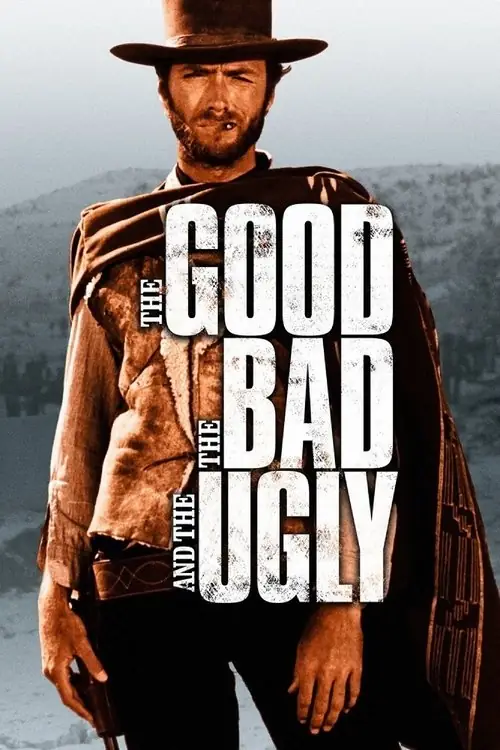 The Good, the Bad and the Ugly
Ladies and gentlemen, I present the undisputed heavyweight champion of the western genre, a film so iconic…
The Good, the Bad and the Ugly
Ladies and gentlemen, I present the undisputed heavyweight champion of the western genre, a film so iconic…
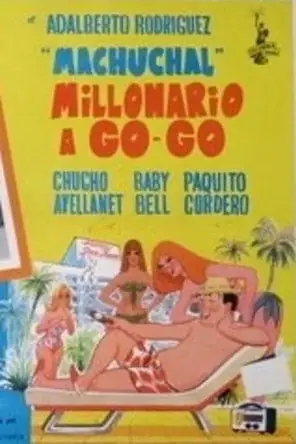 Millonario a go-go
Jibaro Machuchal, a man whose name alone sounds like it deserves its own theme music, inherits a piece of…
Millonario a go-go
Jibaro Machuchal, a man whose name alone sounds like it deserves its own theme music, inherits a piece of…
 The Convert
Ladies and gentlemen, allow me to present what might be the most catastrophically awkward romantic…
The Convert
Ladies and gentlemen, allow me to present what might be the most catastrophically awkward romantic…