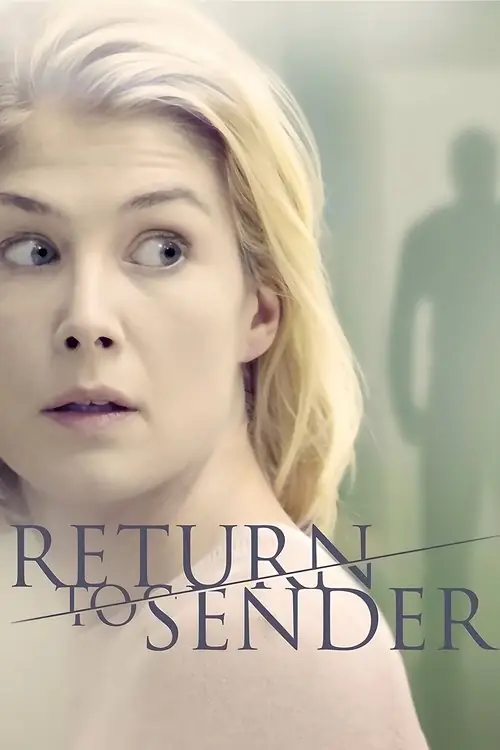
Dream Note
Alright, let me paint you a picture more awkward than showing up to a costume party in civilian clothes. A nurse — a professional caregiver, someone whose entire career is built on the principle of helping vulnerable people — opens her door expecting a blind date, and instead encounters a stranger who has come to visit. In a mix-up that would make a sitcom writer say actually that's a bit dark for our show, she confuses this random person for her romantic prospect. And then this individual, this uninvited harbinger of catastrophe, commits an act of such profound violation that the film's entire tonal foundation shifts beneath your feet like tectonic plates having a very bad day. The assault shatters everything. The nurse's life — her sense of safety, her trust in the basic decency of strangers, her ability to exist in her own home without looking over her shoulder — gets demolished with the thoroughness of a wrecking ball at a demolition derby. The film doesn't shy away from the aftermath, the long and agonizing process of trying to rebuild something resembling normalcy from rubble. This is not a movie interested in your comfort, and frankly, it shouldn't be. But then — and here's where the film makes its most audacious narrative swing — the assailant gets paroled from prison. Released back into the world, presumably with a firm handshake and a suggestion to stay out of trouble, as if a stint behind bars has somehow rewired whatever was broken in the first place. Our protagonist, rather than crumbling, channels her devastation into something ferocious: a methodical campaign to reclaim her autonomy and settle the score with the person who tried to destroy her. The revenge trajectory is handled with a cold precision that mirrors the protagonist's own calculated approach. This isn't cathartic violence set to an inspiring soundtrack — it's a deliberate, uncomfortable examination of what happens when the legal system fails to deliver the closure that victims are told to expect. The nurse's transformation from victim to avenger isn't glorified or triumphant; it's necessary and terrifying and complicated in ways that lesser films would smooth over. A harrowing watch, but one that earns every uncomfortable minute of your attention.
Alright, let me paint you a picture more awkward than showing up to a costume party in civilian clothes. A nurse — a professional caregiver, someone whose entire career is built on the principle of helping vulnerable people — opens her door expecting a blind date, and instead encounters a stranger who has come to visit. In a mix-up that would make a sitcom writer say actually that's a bit dark for our show, she confuses this random person for her romantic prospect. And then this individual, this uninvited harbinger of catastrophe, commits an act of such profound violation that the film's entire tonal foundation shifts beneath your feet like tectonic plates having a very bad day. The assault shatters everything. The nurse's life — her sense of safety, her trust in the basic decency of strangers, her ability to exist in her own home without looking over her shoulder — gets demolished with the thoroughness of a wrecking ball at a demolition derby. The film doesn't shy away from the aftermath, the long and agonizing process of trying to rebuild something resembling normalcy from rubble. This is not a movie interested in your comfort, and frankly, it shouldn't be. But then — and here's where the film makes its most audacious narrative swing — the assailant gets paroled from prison. Released back into the world, presumably with a firm handshake and a suggestion to stay out of trouble, as if a stint behind bars has somehow rewired whatever was broken in the first place. Our protagonist, rather than crumbling, channels her devastation into something ferocious: a methodical campaign to reclaim her autonomy and settle the score with the person who tried to destroy her. The revenge trajectory is handled with a cold precision that mirrors the protagonist's own calculated approach. This isn't cathartic violence set to an inspiring soundtrack — it's a deliberate, uncomfortable examination of what happens when the legal system fails to deliver the closure that victims are told to expect. The nurse's transformation from victim to avenger isn't glorified or triumphant; it's necessary and terrifying and complicated in ways that lesser films would smooth over. A harrowing watch, but one that earns every uncomfortable minute of your attention.
— Dreamer's log, recorded 1945 in the cloudsAdjacent Dreams in the Cloud
 Go Kart Go
Behold the primal drama of childhood competition, where the stakes are nothing and the emotions are…
Go Kart Go
Behold the primal drama of childhood competition, where the stakes are nothing and the emotions are…
 The Good, the Bad and the Ugly
Ladies and gentlemen, I present the undisputed heavyweight champion of the western genre, a film so iconic…
The Good, the Bad and the Ugly
Ladies and gentlemen, I present the undisputed heavyweight champion of the western genre, a film so iconic…
 Millonario a go-go
Jibaro Machuchal, a man whose name alone sounds like it deserves its own theme music, inherits a piece of…
Millonario a go-go
Jibaro Machuchal, a man whose name alone sounds like it deserves its own theme music, inherits a piece of…
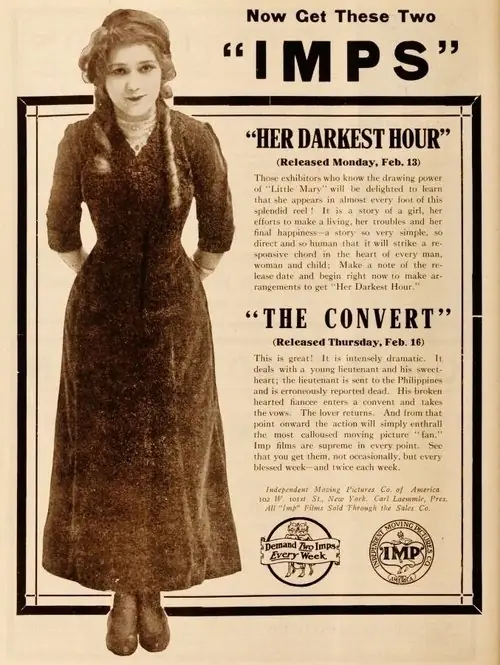 The Convert
Ladies and gentlemen, allow me to present what might be the most catastrophically awkward romantic…
The Convert
Ladies and gentlemen, allow me to present what might be the most catastrophically awkward romantic…