Dream Note
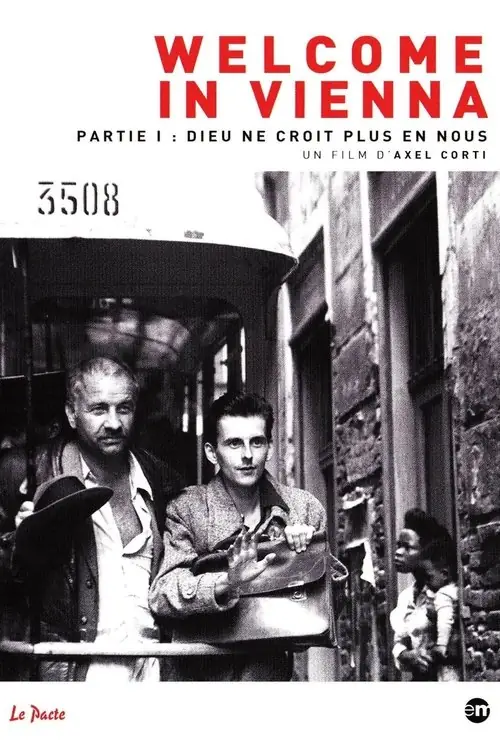
Vienna, nineteen thirty-eight, and the fascists have arrived to make your existence unbearable in ways you never imagined. When Ferry Tobler's father is executed by the Nazi regime, this young Jewish man comprehends with crystalline clarity that remaining in Austria is no longer compatible with continuing to breathe. He bolts for Prague, where he encounters a fellow exile and a compassionate Czech humanitarian worker who understands that the distance between 'refugee' and 'corpse' is measured in border crossings. What follows is a harrowing overland odyssey through a Europe that is rapidly transforming into a continent-sized hunting ground. These three individuals, alongside other displaced souls fleeing systematic annihilation, must navigate a landscape where every checkpoint could mean death, every stranger could be an informer, and every act of kindness is a wager against impossible odds. Their passage from Prague to Paris and eventually to Marseille resembles less a journey and more an elaborate exercise in cheating the reaper at his own game. The Marseille section is where the desperation reaches its zenith, because the port city represents the final threshold between continental imprisonment and maritime deliverance. Securing passage on a vessel becomes the singular obsession — that ship is the literal difference between survival and becoming another statistic in history's most appalling ledger. The film makes you feel the gravitational pull of that harbor with visceral intensity, every wave lapping at the docks like a promise or a taunt depending on whether you have the necessary documents. What distinguishes this from standard wartime drama is its insistence on documenting the bureaucratic machinery of genocide — not just the dramatic violence but the paperwork, the regulations, the systematic stripping of rights that precedes the physical destruction. Ferry's story is a reminder that genocide doesn't begin with gas chambers; it begins with classifications, restrictions, and the gradual normalization of cruelty. Essential, exhausting, and a film that should be mandatory viewing for anyone who thinks 'it could never happen here.' It can, it did, and watching this makes damn sure you never forget it.
Vienna, nineteen thirty-eight, and the fascists have arrived to make your existence unbearable in ways you never imagined. When Ferry Tobler's father is executed by the Nazi regime, this young Jewish man comprehends with crystalline clarity that remaining in Austria is no longer compatible with continuing to breathe. He bolts for Prague, where he encounters a fellow exile and a compassionate Czech humanitarian worker who understands that the distance between 'refugee' and 'corpse' is measured in border crossings. What follows is a harrowing overland odyssey through a Europe that is rapidly transforming into a continent-sized hunting ground. These three individuals, alongside other displaced souls fleeing systematic annihilation, must navigate a landscape where every checkpoint could mean death, every stranger could be an informer, and every act of kindness is a wager against impossible odds. Their passage from Prague to Paris and eventually to Marseille resembles less a journey and more an elaborate exercise in cheating the reaper at his own game. The Marseille section is where the desperation reaches its zenith, because the port city represents the final threshold between continental imprisonment and maritime deliverance. Securing passage on a vessel becomes the singular obsession — that ship is the literal difference between survival and becoming another statistic in history's most appalling ledger. The film makes you feel the gravitational pull of that harbor with visceral intensity, every wave lapping at the docks like a promise or a taunt depending on whether you have the necessary documents. What distinguishes this from standard wartime drama is its insistence on documenting the bureaucratic machinery of genocide — not just the dramatic violence but the paperwork, the regulations, the systematic stripping of rights that precedes the physical destruction. Ferry's story is a reminder that genocide doesn't begin with gas chambers; it begins with classifications, restrictions, and the gradual normalization of cruelty. Essential, exhausting, and a film that should be mandatory viewing for anyone who thinks 'it could never happen here.' It can, it did, and watching this makes damn sure you never forget it.
— Dreamer's log, recorded 1961 in the cloudsAdjacent Dreams in the Cloud
 Go Kart Go
Behold the primal drama of childhood competition, where the stakes are nothing and the emotions are…
Go Kart Go
Behold the primal drama of childhood competition, where the stakes are nothing and the emotions are…
 The Good, the Bad and the Ugly
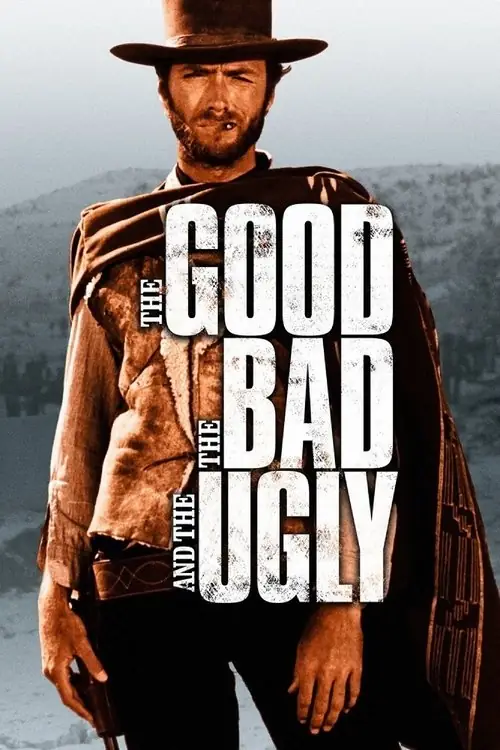
Ladies and gentlemen, I present the undisputed heavyweight champion of the western genre, a film so iconic…
The Good, the Bad and the Ugly
Ladies and gentlemen, I present the undisputed heavyweight champion of the western genre, a film so iconic…
 Millonario a go-go
Jibaro Machuchal, a man whose name alone sounds like it deserves its own theme music, inherits a piece of…
Millonario a go-go
Jibaro Machuchal, a man whose name alone sounds like it deserves its own theme music, inherits a piece of…
 The Convert
Ladies and gentlemen, allow me to present what might be the most catastrophically awkward romantic…
The Convert
Ladies and gentlemen, allow me to present what might be the most catastrophically awkward romantic…